
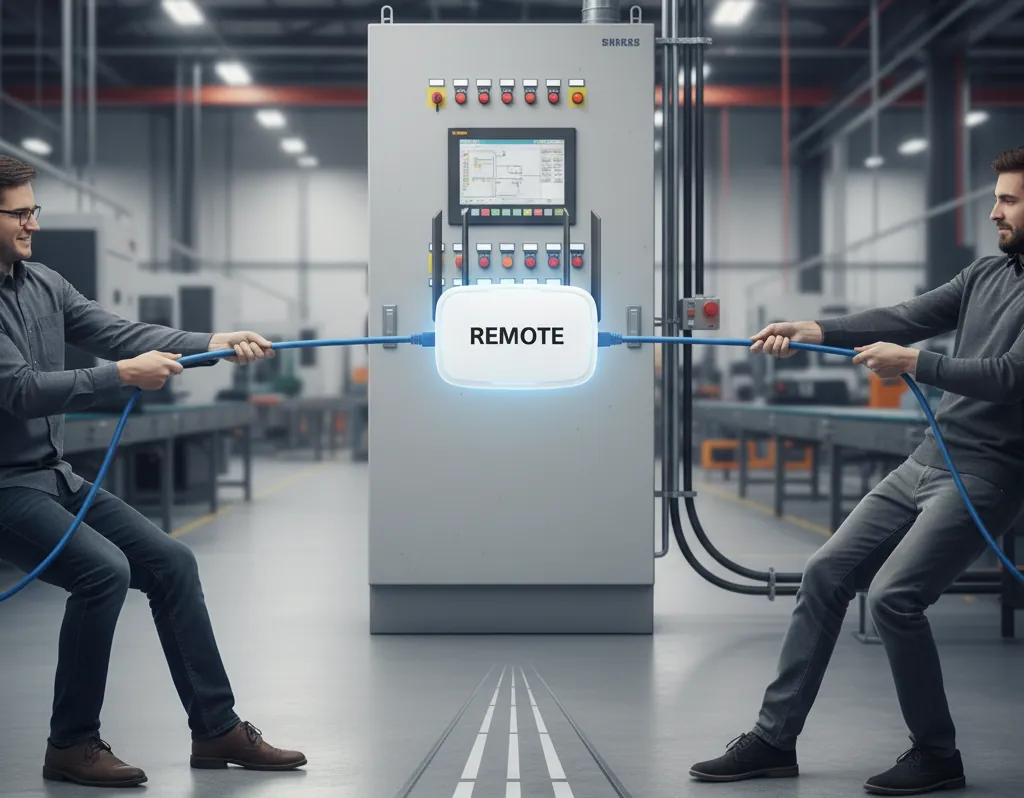
Let’s talk about a familiar scenario. You’re a system integrator, a trusted advisor who designs and builds the intricate operational technology systems that keep the modern world running. You’re the Gandalf to your client’s Frodo, guiding them through the treacherous landscape of industrial processes. But when the conversation turns to remote access, a common refrain emerges: “That’s up to our customer to decide.”
While this sentiment is understandable, even admirable in its respect for client autonomy, it’s a perspective that’s becoming increasingly outdated. In fact, it might be the single biggest obstacle preventing you from launching a more profitable, scalable, and secure service offering.
What your customer needs is control. Control of who can do what. This is called ‘Authorisation’. Make that simple, run the rest, provide seamless audit, everyone is happy.
The Times They Are a-Changing
Think about how much of the technology landscape has shifted towards managed services. We didn’t keep our email servers in-house; we embraced Office 365. We ditched the filing cabinets for BambooHR. The stack of servers in the back room? Now it’s a line item on a cloud services bill. The evidence is overwhelming: businesses are choosing to outsource complexity and focus on their core competencies. The managed services market is projected to reach a staggering $671.14 billion by 2030, a clear indicator of this trend.
So why should secure remote access for the complex world of operational technology be any different? The reality is, most of your clients aren’t experts in this field. They’re experts in manufacturing widgets, treating wastewater, or generating power. Expecting them to also be experts in cybersecurity is like expecting a concert pianist to rewire the concert hall.
The IT Department: A Square Peg in a Round Hole
“But wait,” you might say, “our customers have IT departments for that.” And you’re right, they do. But here’s the rub: corporate Information Technology teams are often ill-equipped to handle the unique demands of the operational technology environment. They’re masters of the corporate network, but the factory floor is a different beast entirely.
The typical IT solution is a “one-size-fits-all” Virtual Private Network, which is about as suitable for a SCADA system as a unicycle is for the Tour de France. This approach often leads to a host of problems that you, the system integrator, are left to deal with:
- Clashing IP Addresses: A nightmare of overlapping IP addresses between your network and your client’s.
- Software Overload: The hassle of installing and maintaining different VPN software for every single customer.
- Security Theater: The challenge of implementing true Multi-Factor Authentication, especially with shared accounts, leaving security gaps that could be exploited.
- Insurance Woes: The ever-present threat of failing a cyber-security insurance audit due to the lack of robust security measures like Single-Sign-On.
The Myth of Customer Preference
The belief that most customers want to manage their own remote access is often a case of selection bias. You’re likely hearing from a vocal minority, while a silent majority would gladly hand over the reins to a trusted partner. They’re looking for a guide, an expert to lead them through the complexities of this critical aspect of their business.
By offering a managed secure remote access solution, you’re not taking away their choice; you’re providing a vetted, expert recommendation. And with a modern platform, the customer doesn’t lose control. A unified web interface allows them to retain full authority over who can access what, and when.
Instead what your customer needs is control. Control of who can do what. This is called ‘Authorisation’. Make that simple, run the rest, provide seamless audit, everyone is happy.
The Path to Profitability and Sanity
Embracing a managed service model for secure remote access isn’t just about better security; it’s about building a better business. By standardising on a single, unified platform, you can:
- Increase Profitability: Move away from a cost-plus model and price your services based on the immense value you provide: uptime, security, and peace of mind.
- Improve Efficiency: Eliminate the time your team wastes troubleshooting a dozen different remote access methods. The more customers you manage, the lower your per-unit cost becomes.
- Strengthen Your Position: Solidify your role as the indispensable, trusted advisor who understands the unique needs of your clients’ operational technology environments.
The world of industrial operations is complex enough. Don’t let an outdated notion of “customer choice” prevent you from offering a service that is more secure, more efficient, and ultimately, more profitable. It’s time to lead the conversation and guide your clients towards a better solution.