
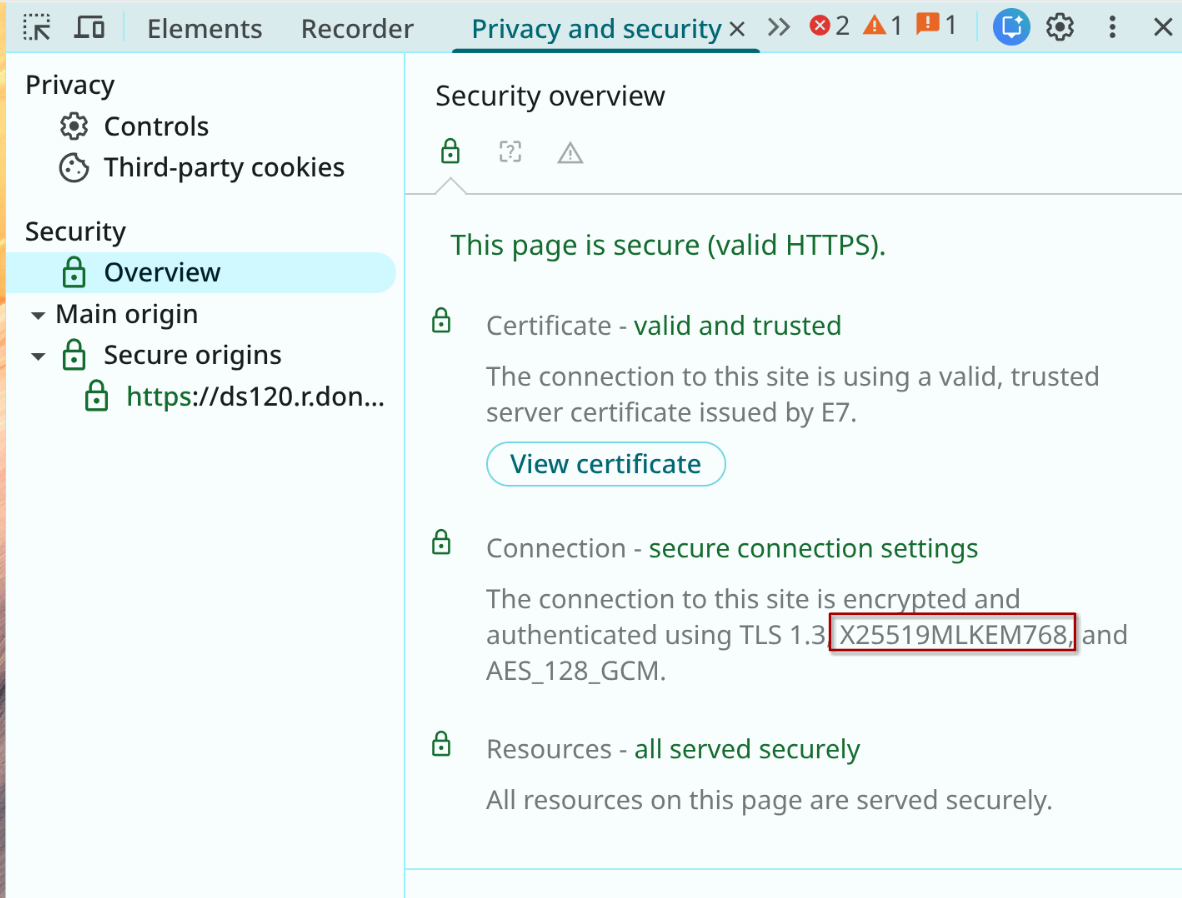
It’s a tale as old as time: we build a better lock, and someone, somewhere, starts building a better lock-pick. In the digital world, we’re on the cusp of a monumental leap in lock-picking technology: quantum computing. The cryptographic locks we rely on for everything from banking to binge-watching are in danger of becoming as effective as a screen door on a submarine. But fear not, because the future of digital security is already taking shape, and it’s called Post-Quantum Cryptography. And, its a standard feature in Agilicus AnyX.
The Quantum Problem: A Digital “Harvest” is Coming
Right now, much of our online security, specifically the Transport Layer Security (TLS) that puts the ‘S’ in HTTPS, relies on mathematical problems that are incredibly difficult for even the most powerful supercomputers to solve. Think of it like trying to find two specific grains of sand on a vast beach. For today’s computers, it’s a practically impossible task. They just can’t reverse logarithms and primes.
Quantum computers, however, play by a different set of rules. For them, solving these problems will be trivial. This means that the encryption protecting your data today could be shattered by the quantum computers of tomorrow. This has led to a rather unsettling strategy known as “harvest now, decrypt later.” Adversaries are scooping up encrypted data today, storing it, and waiting for the day they can unleash a quantum computer to read it all. It’s like a digital version of waiting for the next “Greatest Hits of the ’80s” compilation to finally get that one song you love.
This is where Post-Quantum Cryptography enters the scene. It is the development of new cryptographic algorithms that are designed to be secure against both classical and quantum computers. These new methods are based on different, more complex mathematical problems that will still be a Herculean task for even a quantum computer to solve.
Layering Up for a Secure Future: Defence in Depth
The move to post-quantum in TLS is a critical step, but it’s not the whole picture. True security isn’t about finding one silver bullet; it’s about building a fortress with multiple layers of defence. This strategy is known as “defence in depth,” a concept borrowed from military strategy where multiple, redundant layers of defence are used to protect an asset. If one layer is breached, the next is there to stop the attacker. It’s the security equivalent of not only locking your door but also having a moat, a drawbridge, and maybe even a dragon.
This is where an Identity-Aware Proxy, like Agilicus AnyX, comes into play. Agilicus AnyX acts as a gatekeeper for your applications and resources, granting access based on a user’s identity and context, not just their network location. Think of it as a bouncer who doesn’t just check if you’re on the list, but also verifies your ID, checks your credentials, and makes sure you’re not wearing socks with sandals.
By integrating identity, firewall, and encryption, Agilicus AnyX creates a formidable defence-in-depth strategy:
- Identity: Before anyone gets near your resources, they have to prove who they are. This isn’t just a password; it’s robust multi-factor authentication.
- Firewall: Access is not a free-for-all. An identity-aware firewall controls access based on the user’s identity, granting them the least amount of privilege necessary to do their job. This is like giving a guest a key to their room, but not the master key to the whole hotel.
- Encryption: And, of course, all of this is wrapped in a secure, encrypted tunnel. With the looming quantum threat, it’s only a matter of time before this layer is fortified with post-quantum.
From Rusty Rigs to Crypto Powerhouses
Now, let’s talk about the real world, specifically the world of industrial control systems. Think of the Programmable Logic Controllers (PLCs) and Human-Machine Interfaces (HMIs) that run everything from our power grid to our manufacturing plants. Many of these devices are the workhorses of our critical infrastructure, but they were designed in an era when “cybersecurity” meant a locked door to the server room. They often don’t support modern TLS cryptography, making them a tempting target for attackers.
This is where a solution like Agilicus AnyX shines. It can be deployed without any changes to the existing network architecture, essentially wrapping these legacy devices in a modern security blanket. It acts as a secure gateway, enforcing multi-factor authentication and precise access control for devices that can’t do it themselves.
By using an identity-aware proxy, you can take a PLC that speaks the digital equivalent of ancient Latin and make it fluent in the language of modern, secure communication. It’s like giving your old, reliable Lada the engine and security system of a brand-new sports car.
While the full-scale implementation of post-quantum across the internet is still in its early stages, the groundwork is being laid. Forward-thinking security platforms are being built with “crypto-agility” in mind – the ability to adapt and upgrade to new cryptographic standards as they become available. By adopting a defence-in-depth strategy with an identity-aware proxy, you’re not only securing your systems for today, but you’re also building a foundation that’s ready for the quantum future. You’re turning your potential vulnerabilities into modern crypto powerhouses, ready for whatever comes next. And in the world of cyber security, being ready is half the battle.
Got traditional industrial? Want modern post-quantum? With no changes? Give us a call.