

DevOps: How We Build
Overview
DevOps. Comining development practices with Operations practices. Shifting things left. Moving to a more continuous cycle of integration and delivery.
DevOps has spawned a culture. A set of tools. It is highly complementary with Agile, of which Agilicus is a strong proponent.
-

Today’s post brought to you by the letter ‘k’: quickly re-pull an image in kubernetes
Have you ever had a Pod in a Deployment that you wish would just pull the latest container image to see what’s up? Want to run the equivalent of `touch`? Read on!
-
Completely Complex Cloud Cluster Capacity Crisis: Cool as a Cucumber in Kubernetes
Keeping your cool during an upgrade is important. Let the scheduler do its work, you’ll reconverge to happiness.
-
Ceph in the city: introducing my local Kubernetes to my ‘big’ Ceph cluster
Like scalable storage? Like resilience, redundancy? Want to run your own Kubernetes cluster with great persistent disks? Let’s talk ceph!
-
Kooking Kontainers With Kubernetes: A Recipe for Dual-Stack Deliciousness
Kubernetes technically doesn’t support dual-stack (ipv4 and ipv6 simultaneously). What if you want to run some CI job in there that requires a localhost ::1 to bind to? Read on!
-
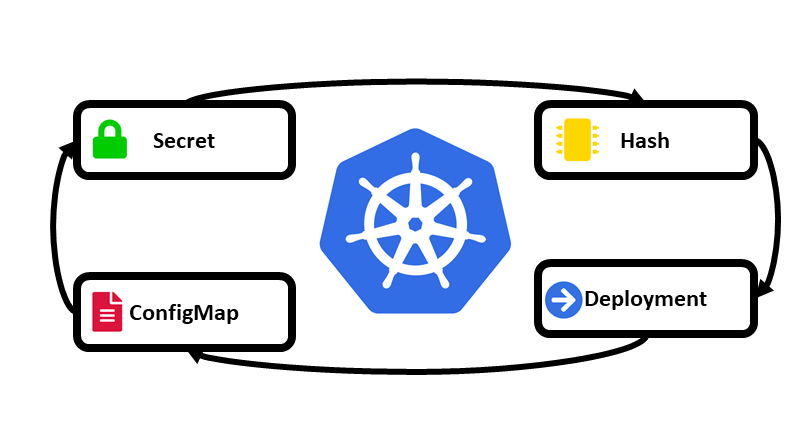
Helm, Kubernetes, and the immutable configMap… a design pattern
Add the sha-hash of a configmap contents to its name as a design pattern and simplify your Deployment restarts, knowing they always have the right value and don’t die on error.
-

Laughably Loquacious Logging
Cloud logging. How much space does a typical keep-alive take if you log it? You would be shocked that 1 byte of log could be 32+ KiB of output space. Watch the entropy!
-
Snooping on your Kubernetes nodes containers without ssh’ing to it: dink
Want to see what ‘docker’ is doing on a Kubernetes node (logs, ps, images), or re-pull an image? Don’t want to ssh there? dink!
-
DoS’ing the cloud with logs
Could cloud logging be the next NTP amplification attack for a DDoS? A small input produces a larger output, the ingredients are there…
-
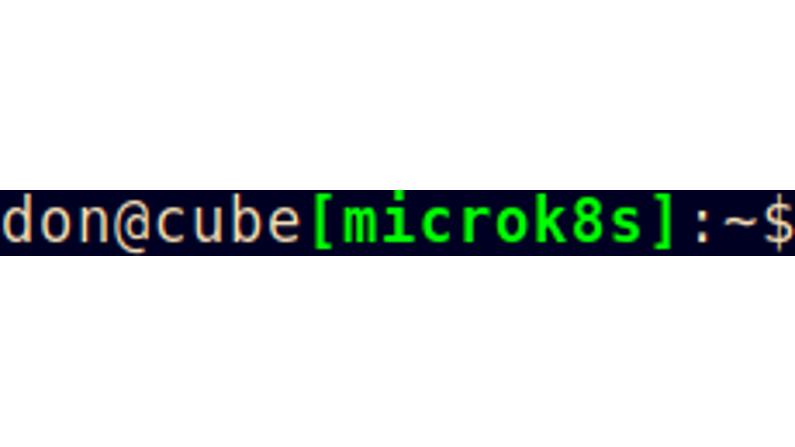
Multiple Kubernetes contexts and your multi-coloured prompt
You are working with multiple clouds. But, you keep changing context and then accidentally applying something. Ooops. If only this could be simpler.Drop these two bits in your .bashrc. Now you can simply say ‘context foo’ and be in that context with a little bit of colour in your prompt to remind you.
-

I Declare is not the same as Make It So
Declarative vs Imperative. In a ‘declarative’ world I document the desired state, and it is the job of the system to ‘make it so’. In a declarative world you don’t need to worry about ‘how’, and you don’t need to worry about things later breaking… If they change, the system puts it back. In an imperative world, you instruct each step. Install that software, configure that port, etc. Does declarative work always? read on
-
When you throw in the towel on declarative
In a declarative world its all written down and checked into version control. No commands are used. Sometimes you hit a wall and have to punt. Here I show a simple workaround using `envsubst` for those times that declarative just doesn’t work.
-

pause: how to debug your Kubernetes setup
Sometimes you need a debug container hanging around to check something from within your cluster. You cobble something together, make the ‘command’ be ‘sleep 3600’ or ‘tail -f /dev/null’ and call it a day. But they don’t terminate gracefully. Let’s learn how to fix this.
-

Let’s Encrypt Staging. Curl without the -k
Are you lazy and use ‘-k’ to curl all the time when using Let’s Encrypt staging? Or worse, use snake-oil? Or even worse, use just http for ‘test’? Let me show you how to fix that, simply.
-

Speed your CI, decrease your cost. The preemptible node
Cloud Native means being resilient to unexpected changes, to achieving high availability through embracing failures rather than designing them out. Google has added ‘preemptible’ nodes to their Google Cloud, available to their managed Kubernetes. These nodes are a lot cheaper, but there’s a catch: sometimes they die! Can we make use of this? Let’s see, using our Continuous Integration runners of Gitlab.
-

‘first’ and ‘only’ are four-letter words in cloud. How to do something ‘once’ and ‘first’ in a Kubernetes Deployment
Cloud Native implies a continuum. A declarative world that has no special event that occurs when it is started or finished. Non cloud-native applications often have ‘start’ or ‘upgrade’ tasks that need performing. Things that need to be done ‘one’ or ‘first’ or at some lifecycle stage. How can we integrate these two worlds?